
What Is Trauma? And What EMDR Therapy Involves
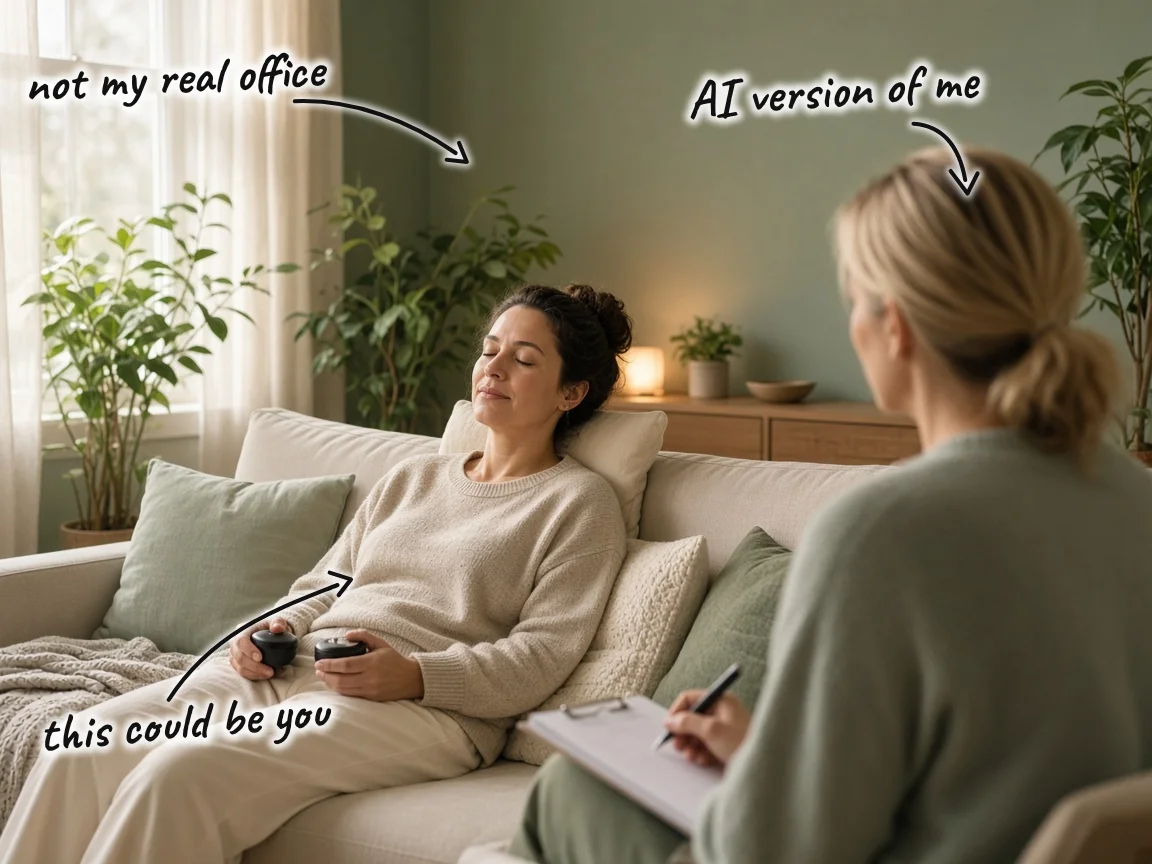
AI-generated image: not my real office.
Many people who come to therapy in Calgary say some version of the same thing: "I don't think what happened to me counts as trauma." Maybe other people had it worse. Maybe you have spent years telling yourself to just get over it.
This post is a plain-language look at what trauma is, how it can show up in everyday adult life, and what EMDR therapy actually involves, so you can decide for yourself whether it is worth a conversation.
What is trauma?
The Centre for Addiction and Mental Health (CAMH) describes trauma as "the lasting emotional response that often results from living through a distressing event." The key word is response. Trauma is less about the event itself and more about how it stayed with you.
That is why two people can go through the same thing and carry it very differently. CAMH also notes that traumatic events can include:
- a recent, single event, such as a car crash or an assault
- a single event from the past, such as a sudden loss or an accident
- a long-term pattern, such as ongoing childhood neglect or abuse
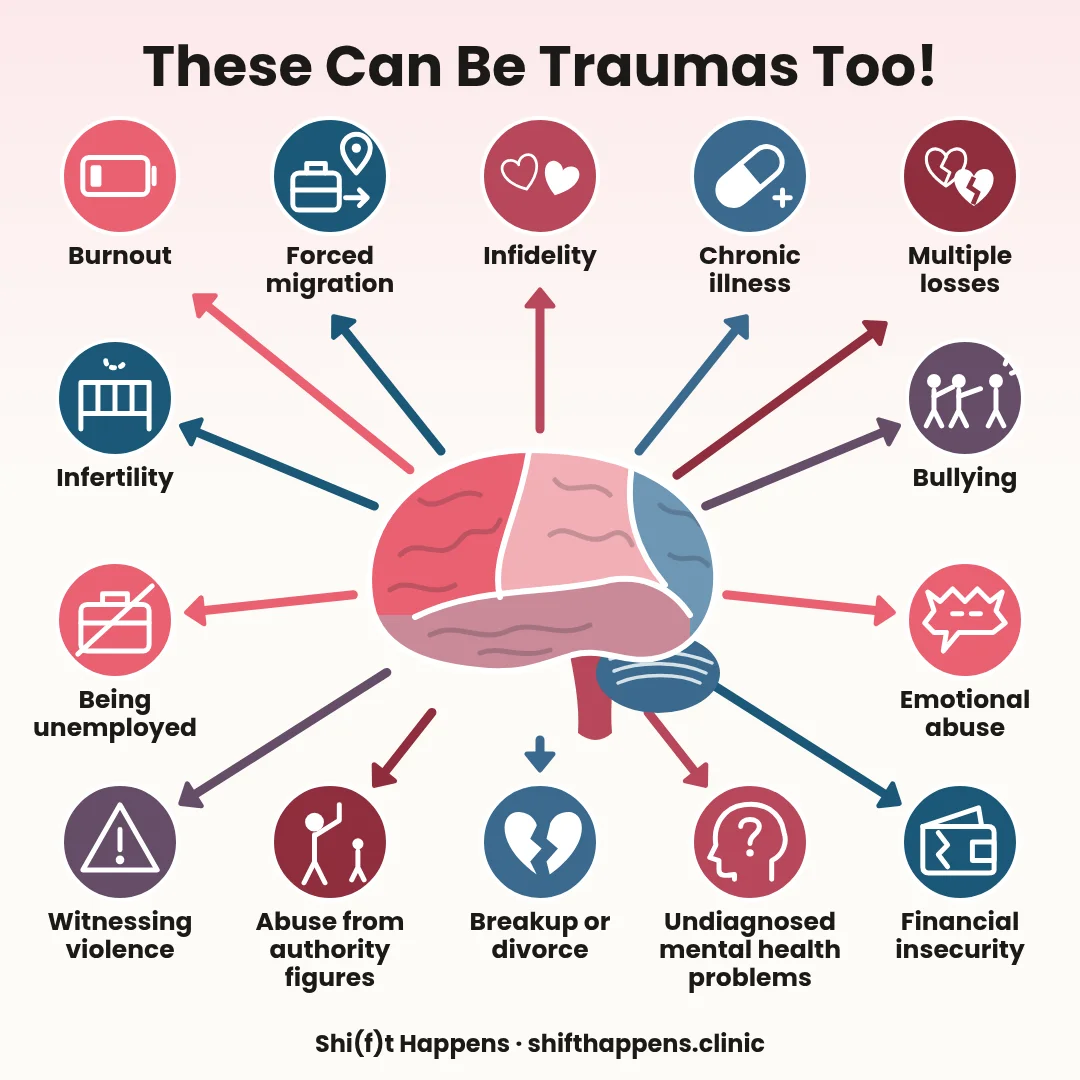
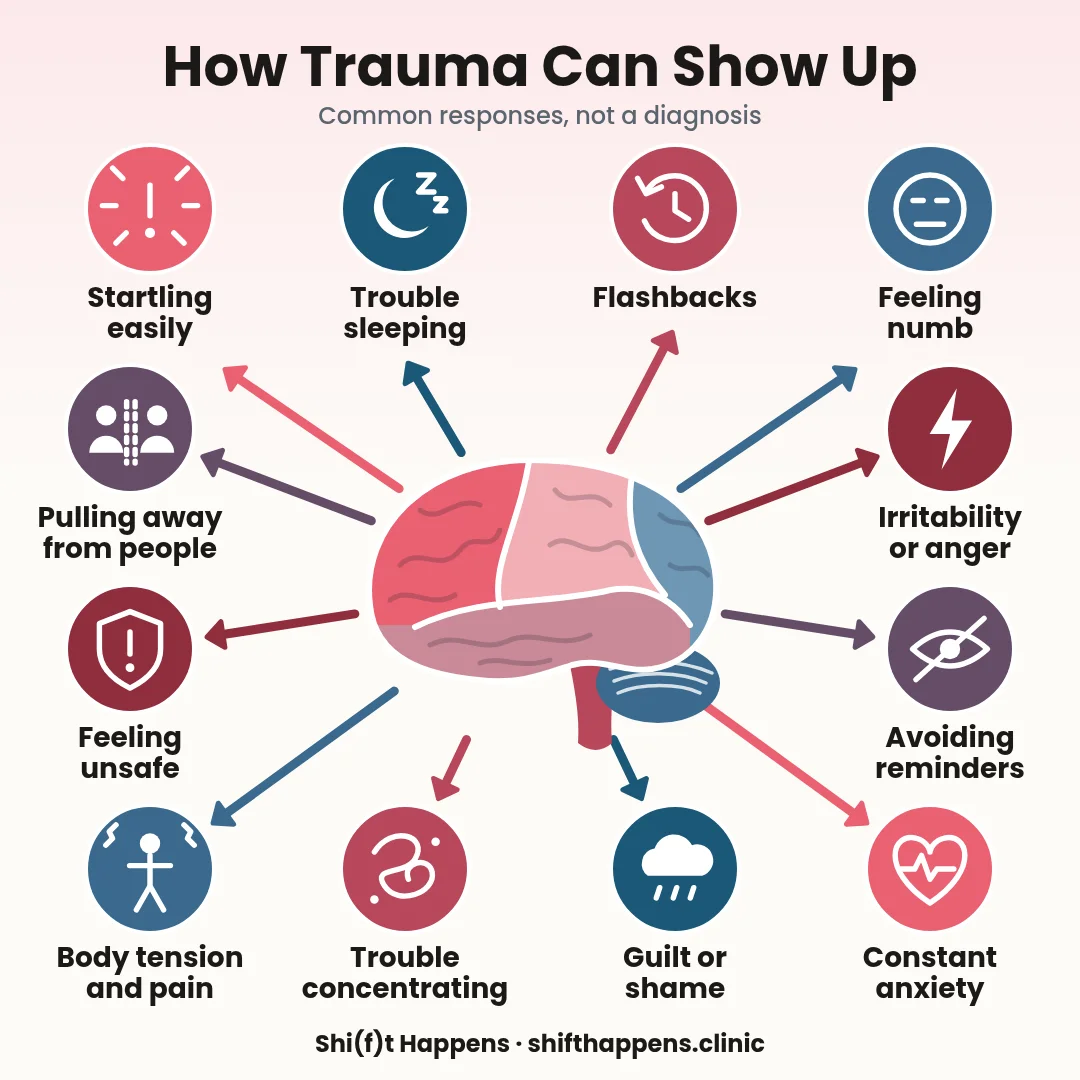
Trauma can also come from things like repeated criticism, bullying, or growing up in a home where you never quite felt safe. You don't need a dramatic story for an experience to still be with you.
How trauma can show up in everyday life
Trauma does not always look like flashbacks. For many adults it looks more ordinary, and it is easy to miss. You might notice:
- your body reacting before your mind catches up: a racing heart, a tight chest, or freezing during conflict
- staying on high alert, scanning rooms, faces or tone of voice
- avoiding certain places, people, conversations or memories
- feeling numb, disconnected or "on autopilot"
- beliefs about yourself that feel true no matter what the evidence says, such as "I'm not safe," "It was my fault" or "I'm too much"
- people-pleasing, overworking or keeping everything under control so nothing can go wrong
None of these on their own mean you "have trauma." They are signs worth getting curious about. When trauma-related thoughts and memories don't fade, or get worse over time, CAMH notes they may develop into posttraumatic stress disorder (PTSD). Only a qualified professional can assess that.
What is EMDR therapy?
EMDR stands for Eye Movement Desensitization and Reprocessing. It is a structured therapy developed by Dr. Francine Shapiro. It is based on the idea that some distressing memories were never fully processed, so they keep feeling current instead of feeling like the past.
In EMDR, you briefly bring a chosen memory to mind while paying attention to something in the present moment, called bilateral stimulation. That can be side-to-side eye movements, alternating taps, or alternating tones. The EMDR International Association describes this "dual attention" as a way of keeping you anchored in the present while you work with the memory.
EMDR is a recognized trauma therapy. The World Health Organization's 2013 guidelines on conditions related to stress list EMDR, alongside trauma-focused cognitive behavioural therapy, as an option that should be considered for adults with PTSD. The same guidelines note that, unlike trauma-focused CBT, EMDR does not involve detailed descriptions of the event, direct challenging of beliefs, extended exposure or homework.
What happens in EMDR: the eight phases
EMDR follows a set structure of eight phases, moving from history taking and preparation, through memory work with bilateral stimulation, to closure at the end of each session and a check-in at the start of the next. Preparation comes first, so grounding and calming skills are in place before any memory work begins, and the time spent in each phase is different for each person. For a phase-by-phase walkthrough, see how EMDR works, step by step.
You stay in control
A common worry is that EMDR is like hypnosis. It isn't. You stay awake, aware and in charge the whole time. A few principles guide the work:
- Pacing comes first: Memory work starts only when you and your therapist agree you have enough ways to settle yourself.
- You can stop at any time: A simple stop signal is agreed on ahead of time.
- You don't have to tell every detail: EMDR needs enough information to identify what you are working on, not a full retelling.
- EMDR can be one part of therapy: At Shi(f)t Happens, EMDR is often used alongside other approaches, such as somatic and attachment-based work, depending on what fits you.
For a closer look at what a session can feel like, and how EMDR compares with CBT, see EMDR Therapy in Calgary: How It Works, EMDR vs. CBT, and What to Expect and the EMDR Therapy page.
EMDR in Calgary and across Alberta
Sheri Boyd, Registered Provisional Psychologist, offers EMDR in person at Thrive Business Centre in SE Calgary and virtually to adults anywhere in Alberta. If you'd like to talk about whether EMDR is a fit, you can book a free 15-minute consultation. There is no pressure to decide anything on that call.
If you are in crisis
Therapy is not an emergency service. If you are in immediate danger, call 911 or go to your nearest emergency department.
- Distress Centre Calgary: call or text 403-266-4357 (24 hours a day) for crisis support in Calgary and southern Alberta.
- 9-8-8 Suicide Crisis Helpline: call or text 988, any time, anywhere in Canada.
Frequently asked questions
What counts as trauma?
Trauma is the lasting emotional response to a distressing experience, not only the experience itself. It can follow a single event, such as an accident, or a long-term pattern, such as childhood neglect. If an experience still affects how you feel, think or react today, it may be worth exploring with a professional.
Do I have to talk about my trauma in detail in EMDR?
No. EMDR needs enough information to identify the memory you are working with, but you do not need to describe every detail out loud.
Is EMDR a recognized therapy?
Yes. The World Health Organization's 2013 guidelines on conditions related to stress include EMDR as an option to consider for adults with PTSD. EMDR should be provided by a clinician trained in the method.
Can I do EMDR virtually in Alberta?
Yes. Shi(f)t Happens offers EMDR in person in SE Calgary and virtually for adults located anywhere in Alberta. Whether virtual EMDR suits you is something to discuss together first.
Sources
- CAMH, "Trauma"
- World Health Organization (2013), Guidelines for the Management of Conditions Specifically Related to Stress, recommendation 14 and EMDR definition
- EMDR International Association, "The Eight Phases of EMDR Therapy"
- Distress Centre Calgary, 24-Hour Crisis Support
- 9-8-8 Suicide Crisis Helpline
Related services